
AI security risks are becoming a part of everyday business life.
Companies are using AI for customer support, content creation, marketing, data analysis, and automation. It saves time, improves productivity, and helps businesses move faster.
However, as adoption increases, businesses are also facing new types of digital threats that were not common before.
Today, cybercriminals are finding smarter ways to take advantage of AI systems. Instead of basic hacking attempts, companies now face more advanced scams, highly personalized phishing emails, fake media, and tools that can be manipulated if not secured properly.
Deepfake scams are becoming more common
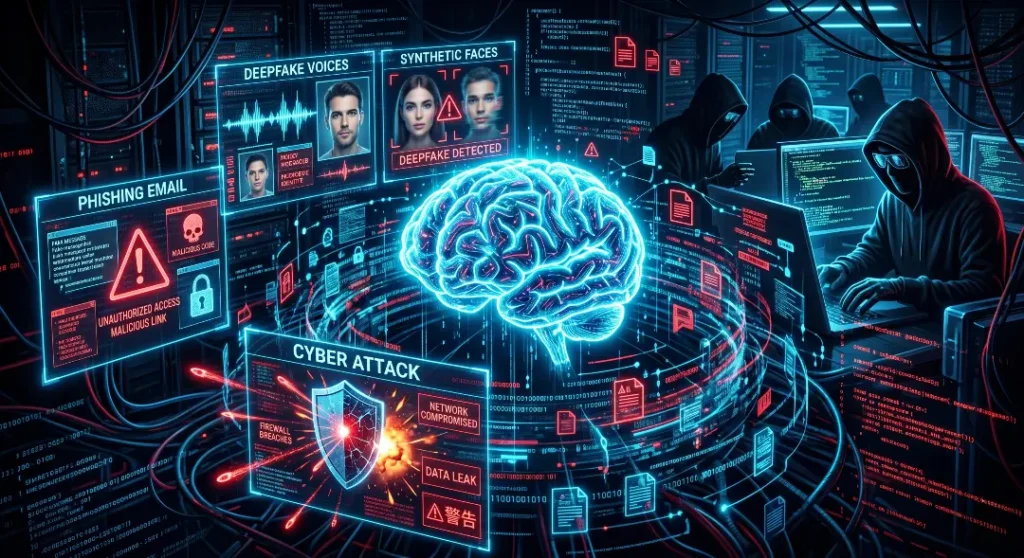
One of the most serious concerns today is the rise of deepfake technology.
Attackers can generate realistic videos or voice recordings that closely mimic real people. For example, an employee might receive a call that sounds exactly like their manager asking for an urgent payment.
Without proper verification, situations like this can easily lead to financial loss or data exposure.
Phishing emails are harder to detect
Phishing emails used to be easier to identify because they often contained spelling mistakes or looked suspicious.
Now, AI tools can generate well-written, natural-sounding messages that appear completely legitimate. These emails may even include personal details, company names, or recent activity, making them more convincing.
As a result, employees are more likely to trust these messages and accidentally share sensitive information.
AI tools can introduce new vulnerabilities
Many organizations rely on AI tools for daily operations such as communication, scheduling, customer support, and data management.
While these tools improve efficiency, they can also create security gaps if access is not controlled properly.
Unauthorized access to such systems can allow attackers to extract private data, send fraudulent messages, or misuse internal processes.
Practical ways to stay protected
The good news is that businesses can reduce these risks by taking simple and effective precautions:
- Train employees to identify suspicious messages and unusual requests
- Use strong passwords along with multi-factor authentication
- Verify sensitive requests through multiple channels
- Restrict access to critical systems and data
- Keep all software and tools updated regularly
In addition to these steps, companies should regularly review their internal processes and security policies to ensure they stay prepared for evolving threats.
Need help improving your security?
As businesses continue to adopt AI, it becomes important to ensure that systems are secure and properly managed.
Even a small oversight can lead to serious consequences, but the right strategy can significantly reduce risk.
Looking to improve your website or digital systems?
Get in touch today.
Final thoughts
AI is transforming the way businesses operate, but it also introduces new challenges that cannot be ignored.
Organizations that take security seriously and stay proactive will be in a much stronger position moving forward.
To understand more about emerging threats and protection strategies, visit
IBM AI Security Guide.
Frequently Asked Questions (FAQs)
What are AI security risks?
AI security risks refer to threats like deepfake scams, phishing attacks, and misuse of automated tools that can expose sensitive business data.
Why are these risks increasing?
As AI becomes more widely used, attackers are also leveraging it to create more advanced and convincing cyber threats.
How can businesses stay safe?
Businesses can improve safety by training employees, using secure authentication methods, and regularly monitoring their systems.